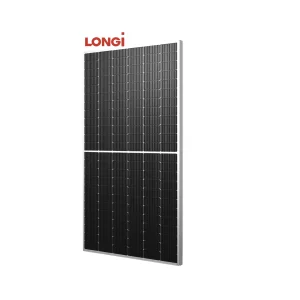
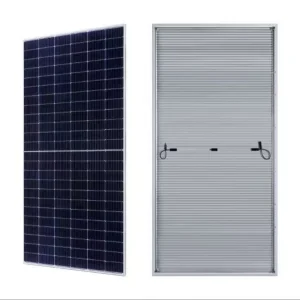
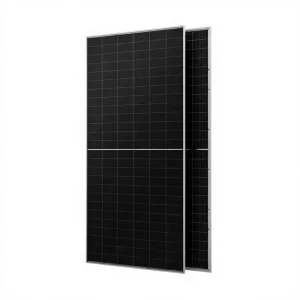
Ningbo GAF Solar Co., Ltd. is a professional Solar Panel Manufacturer | Monocrystalline, Bifacial & High Efficiency PV Modules dedicated to providing reliable solar energy solutions for residential, commercial, industrial, and utility-scale applications worldwide. With a strong commitment to renewable energy innovation, the company delivers advanced photovoltaic products designed to maximize energy generation, efficiency, and long-term performance.
Based in Ningbo, China, GAF Solar operates modern manufacturing facilities equipped with advanced production technologies, automated assembly lines, and comprehensive quality control systems. The company specializes in the development and production of monocrystalline solar panels, bifacial solar modules, high-efficiency photovoltaic panels, rooftop solar solutions, commercial solar systems, industrial solar installations, and customized PV energy projects.
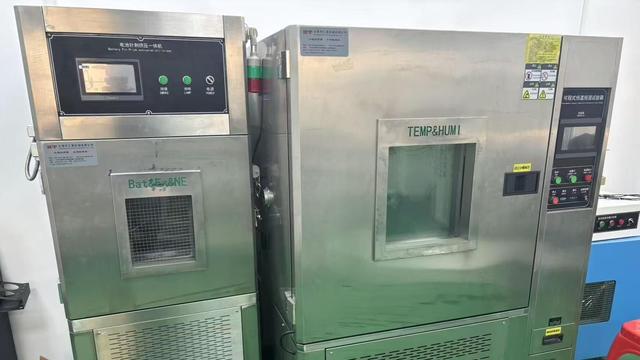
GAF Solar focuses on technological innovation and product reliability. By utilizing premium-grade solar cells, durable materials, and precision manufacturing processes, the company produces solar modules capable of delivering excellent power output, superior weather resistance, and long operational lifespans. Every product undergoes rigorous testing and quality inspections to ensure compliance with international standards and the demanding requirements of global energy markets.
In addition to manufacturing high-performance solar panels, GAF Solar offers comprehensive OEM and ODM services, supporting distributors, EPC contractors, solar developers, energy solution providers, and private-label brands. The company provides flexible customization options, professional technical support, and efficient project coordination from design and production to shipment and after-sales service. Serving customers across North America, Europe, Southeast Asia, the Middle East, Africa, and Latin America, Ningbo GAF Solar Co., Ltd. has established a reputation for quality, reliability, and customer-focused service. Through continuous innovation and sustainable manufacturing practices, the company remains committed to accelerating the global transition toward clean, renewable energy and creating long-term value for partners around the world.
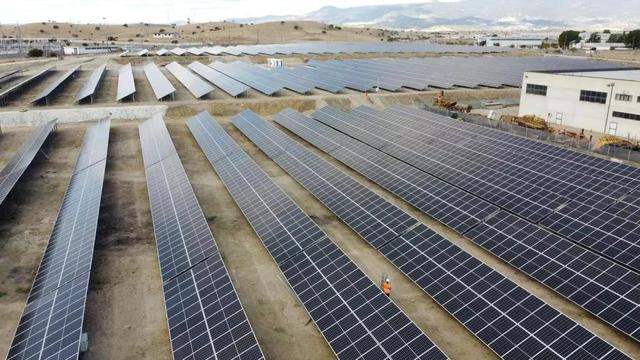
Optimized for high-reflectivity concrete rooftops, flat building configurations, and commercial self-consumption schemes throughout Java.
The Special Capital Region of Jakarta, along with its surrounding industrial corridors (Bekasi, Karawang, Cikarang, and Tangerang), is undergoing a monumental energy transition. As Indonesia commits to net-zero emissions, commercial and industrial (C&I) enterprises are increasingly deploying PLTS Atap (Rooftop Photovoltaic Systems) to hedge against rising grid tariffs and meet international corporate sustainability mandates.
Unlike traditional ground-mount layouts, Jakarta's industrial solar projects face unique geographical constraints. Roof space is premium, cloud cover is frequent, and seasonal tropical monsoons significantly reduce direct irradiation. Furthermore, heavy pollution in the Jakarta metro area leads to rapid dust and particulate deposition on panel surfaces. In this specific macro-environment, Bifacial Solar Panels have emerged as the standard for high-yield solar installations.
By capturing reflected albedo light from concrete factory roofs, metal roof profiles, and nearby structural boundaries, bifacial modules deliver an energy yield gain of 8% to 25% compared to standard monofacial panels. This additional energy output directly drives down the Levelized Cost of Electricity (LCOE), making it the preferred technological choice for project developers, financial sponsors, and industrial energy buyers operating in West Java.
Choosing the optimal silicon cell architecture for the high humidity, low-latitude environments of Western Indonesia.
In modern industrial PV projects, cell technology choice dictates long-term return on investment. Ningbo GAF Solar Co., Ltd. provides leading technological routes: N-Type TOPCon (Tunnel Oxide Passivated Contact) and HJT (Heterojunction Technology). In Jakarta's tropical environment, these advanced cell architectures outperform legacy P-type PERC structures in three distinct metrics: thermal performance, bifaciality index, and annual degradation rates.
Jakarta averages afternoon temperatures above 32°C. While standard P-type panels experience significant power loss due to a temperature coefficient of -0.38%/°C, GAF N-Type panels feature a low coefficient of -0.30%/°C (and down to -0.26%/°C for HJT), yielding up to 4% more net energy on hot days.
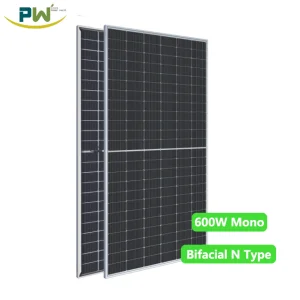
Traditional bifacial setups yield only 70% of front-side performance on the backside. GAF TOPCon modules exhibit a 80% to 85% bifaciality factor, while our premium HJT double-glass modules achieve up to 90% bifaciality. This extracts maximum generation out of diffuse light and secondary reflections.
High relative humidity and high voltage levels can rapidly trigger Potential Induced Degradation (PID) in tropical zones. By utilizing premium POE (Polyolefin Elastomer) encapsulation and dual-glass construction, GAF Solar modules guarantee complete zero-PID risk and low Light Induced Degradation (LID).
Customized solar setups engineered to address Jakarta's unique grid integration guidelines and spatial challenges.
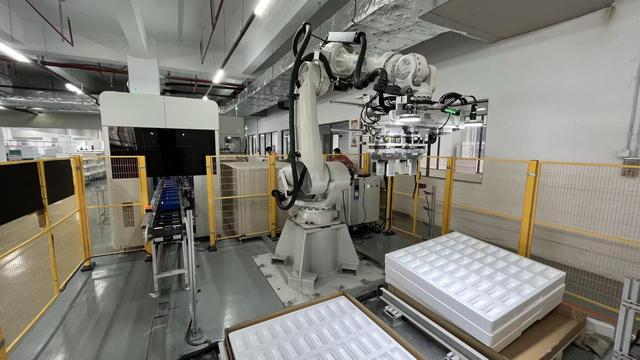
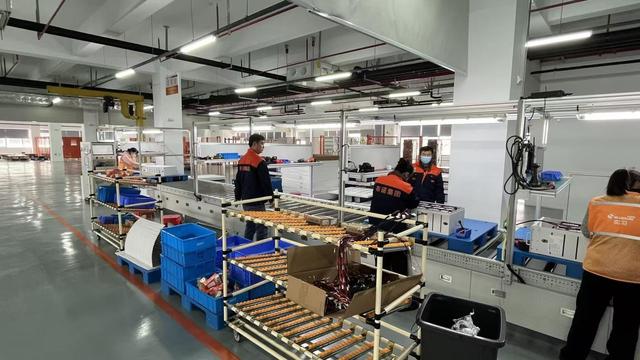
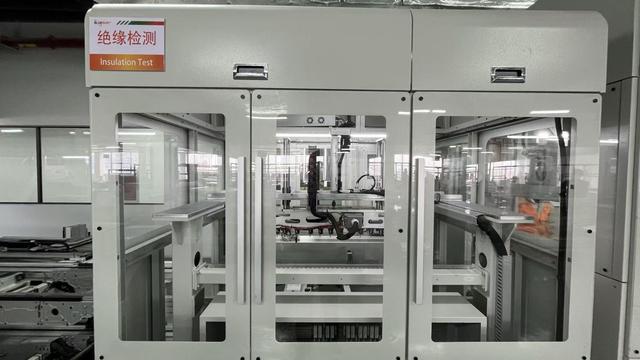
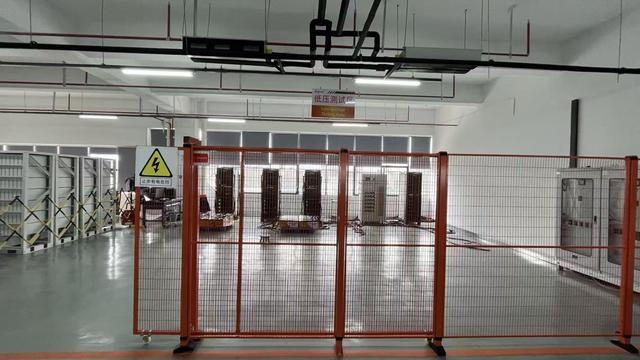
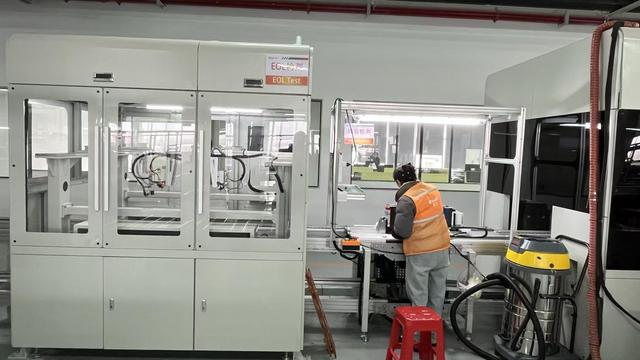
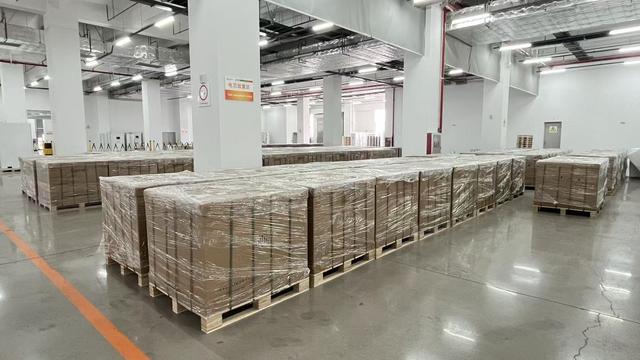
Ningbo GAF Solar Co., Ltd. leverages the strength of its manufacturing facilities in Ningbo, China. Positioned in one of the world's most advanced logistics hubs, our factory utilizes the latest Industry 4.0 automated workflows. Advanced robotics control everything from silicon ingot slicing down to high-precision string soldering and double-glass lamination. By automating critical quality control phases, we achieve standard deviation metrics that surpass global norms.
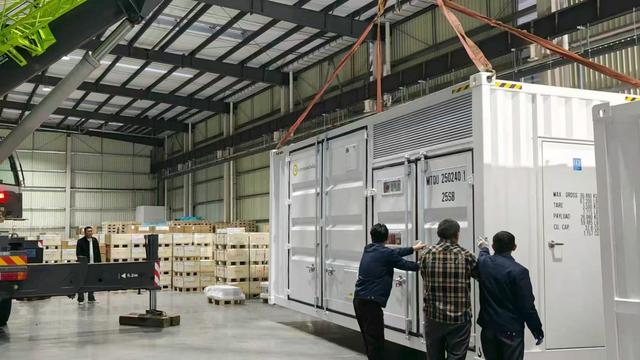
Supply chain integrity is key to project success. We maintain vertical partnerships with premier polysilicon and wafer suppliers to shield clients from raw material price swings. Furthermore, our proximity to the Ningbo-Zhoushan Port—the world's busiest port by cargo tonnage—ensures consistent container availability and prompt dispatch of large-scale solar shipments directly to the Port of Tanjung Priok in North Jakarta.
Developing solar PV infrastructure in Indonesia requires an understanding of complex regulatory frameworks. The Indonesian Ministry of Energy and Mineral Resources (MEMR/ESDM) enforces guidelines regarding roof-load capacities, net-metering ratios, and safety protocols for parallel grid operations. Additionally, developers must navigate TKDN (Tingkat Komponen Dalam Negeri) local-content requirements for utility-scale public projects.
Ningbo GAF Solar works with leading local Indonesian EPC (Engineering, Procurement, and Construction) companies to support compliance. Our bifacial modules carry certifications conforming to International Electrotechnical Commission standards (IEC 61215 and IEC 61730), satisfying both international quality benchmarks and domestic grid requirements. By providing comprehensive technical documentation, detailed structural drawings, and simulation files (.PAN files) for PVsyst modeling, we help developers fast-track administrative approvals through state electricity distributor PT PLN (Persero).
We provide full electrical configuration metrics to ensure inverter compatibility and anti-islanding compliance for seamless interconnection approval under active MEMR standards.
Our established shipping channels guarantee customs clearance support through Tanjung Priok port, keeping project timelines secure and minimizing delays.
Jakarta coastal regions experience high-velocity wind profiles. Our double-glass structures are mechanically rated to handle wind loads up to 2400 Pa and snow loads up to 5400 Pa.
Engineered to support global distribution and regional Indonesian project deployment.
Purchasing tier-1 equivalent bifacial photovoltaic systems requires strict diligence on technical standards, warranty enforceability, and supply-chain logistics. Ningbo GAF Solar Co., Ltd. simplifies this process with a structured system tailored to international buyers and Indonesian corporate developers.
We work with clients on custom design configurations via specialized CAD and PVsyst rendering. Once design layouts are confirmed, our manufacturing facility assigns dedicated production lines, providing real-time scheduling updates and raw material traceability data. We provide customized container packing services designed to prevent panel micro-cracks during sea transit, ensuring your materials arrive in pristine condition at destination ports worldwide.
Developers submit layout dimensions. Our team runs dynamic PVsyst simulations, establishing estimated generation outputs under specific ground albedo scenarios.
We configure optimal cell spacing, customized junction boxes, and frame specifications tailored for specific Indonesian coastal and industrial structural layouts.
Modules undergo inline EL testing, visual sorting, and flash test calibration. Every shipped crate includes detailed serial-number verification sheets.
Key technical and regulatory answers for project engineers, developers, and logistics managers in Indonesia.
Jakarta industrial roofs are typically made of light-colored concrete or coated metal sheets, both of which have high reflective properties (albedo). Standard monofacial modules only capture light hitting the front surface. Bifacial modules capture reflected light from the roof surface on their backside, generating up to 25% more energy. This higher yield helps offset shading from metropolitan pollution and tropical cloud cover, improving project IRR.
Our N-Type TOPCon and HJT modules feature a low temperature coefficient (-0.30%/°C to -0.26%/°C), keeping generation drop to a minimum during hot afternoons. Additionally, our double-glass design with POE encapsulation provides a robust barrier against moisture, preventing PID (Potential Induced Degradation) and ensuring long-term reliability in humid tropical environments.
All GAF Solar modules are fully certified to international standards including IEC 61215 and IEC 61730, and carry CE, TUV, and UL marks. These certifications satisfy PT PLN's technical safety requirements for rooftop PV (PLTS Atap) installations, helping developers secure grid connection approvals.
Shipping directly from Ningbo Port to Tanjung Priok in Jakarta typically takes 8 to 12 days. We coordinate transit schedules, secure custom ocean crates to protect modules, and provide the necessary customs documentation to support smooth clearing processes.
Yes, we provide flexible OEM and ODM services. We customize dimensions, frames, junction boxes, and backsheet designs to meet specific project demands, wind load requirements, and site configurations.
 GAF Solar