Explore high-efficiency photovoltaic modules, integrated solar kits, and energy storage systems optimized for global utility and residential projects.
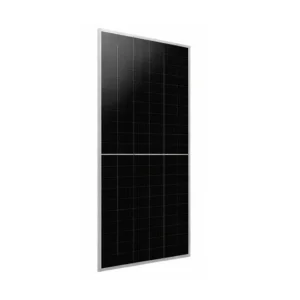
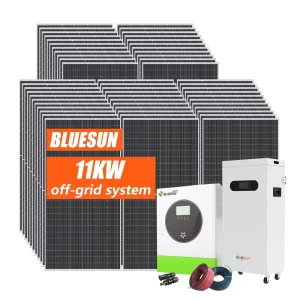
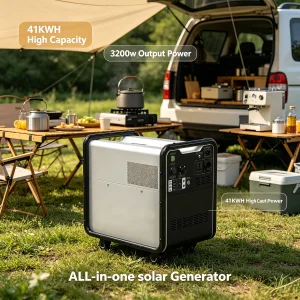
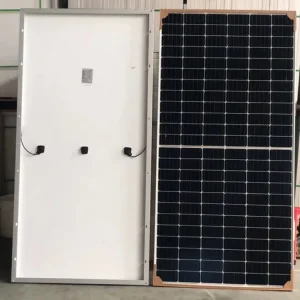
The global transition toward decentralized clean energy has accelerated the demand for high-capacity, low-degradation photovoltaic (PV) modules. As countries race to meet carbon neutrality milestones under the Paris Agreement, procurement managers, Engineering, Procurement, and Construction (EPC) contractors, and utility project developers are restructuring their supply chains. Navigating the matrix of global PV exporters requires a deep understanding of manufacturing capabilities, technology pathways (such as N-type TOPCon, HJT, and P-type PERC), and the economic drivers that distinguish Tier 1 producers from localized manufacturers.
This whitepaper provides a data-driven overview of the top solar power generation factories, focusing on Ningbo GAF Solar Co., Ltd. as an industry case study of modern automation, strict QA protocols, and vertical manufacturing integration. We explore the core technological pillars that determine levelized cost of energy (LCOE) and highlight the logistical and manufacturing advantages of the Chinese PV industrial cluster.
Ningbo GAF Solar Co., Ltd. is a professional Solar Panel Manufacturer | Monocrystalline, Bifacial & High Efficiency PV Modules dedicated to providing reliable solar energy solutions for residential, commercial, industrial, and utility-scale applications worldwide. With a strong commitment to renewable energy innovation, the company delivers advanced photovoltaic products designed to maximize energy generation, efficiency, and long-term performance.
Based in Ningbo, China, GAF Solar operates modern manufacturing facilities equipped with advanced production technologies, automated assembly lines, and comprehensive quality control systems. The company specializes in the development and production of monocrystalline solar panels, bifacial solar modules, high-efficiency photovoltaic panels, rooftop solar solutions, commercial solar systems, industrial solar installations, and customized PV energy projects.
GAF Solar focuses on technological innovation and product reliability. By utilizing premium-grade solar cells, durable materials, and precision manufacturing processes, the company produces solar modules capable of delivering excellent power output, superior weather resistance, and long operational lifespans. Every product undergoes rigorous testing and quality inspections to ensure compliance with international standards and the demanding requirements of global energy markets.
In addition to manufacturing high-performance solar panels, GAF Solar offers comprehensive OEM and ODM services, supporting distributors, EPC contractors, solar developers, energy solution providers, and private-label brands. The company provides flexible customization options, professional technical support, and efficient project coordination from design and production to shipment and after-sales service.
Serving customers across North America, Europe, Southeast Asia, the Middle East, Africa, and Latin America, Ningbo GAF Solar Co., Ltd. has established a reputation for quality, reliability, and customer-focused service. Through continuous innovation and sustainable manufacturing practices, the company remains committed to accelerating the global transition toward clean, renewable energy and creating long-term value for partners around the world.
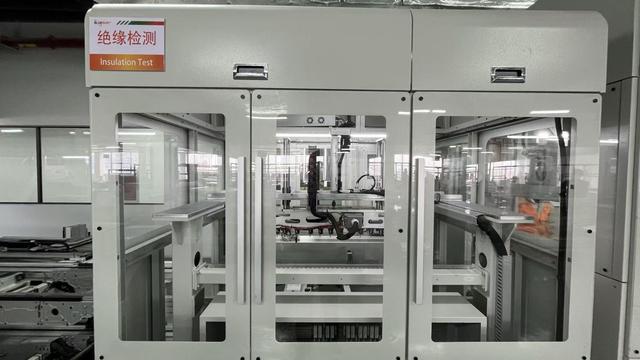
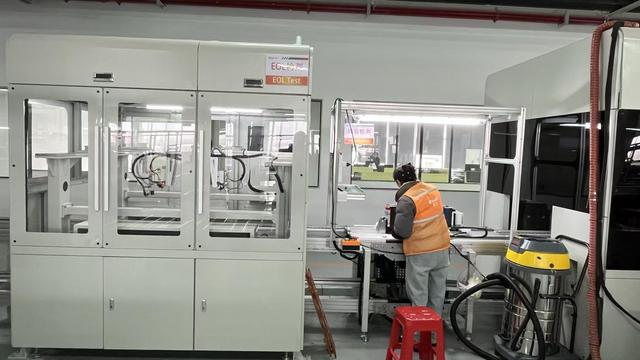
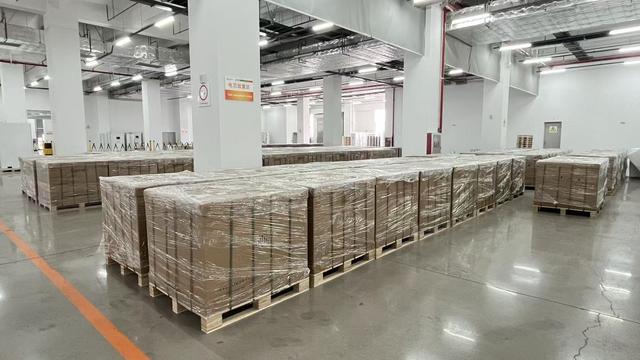
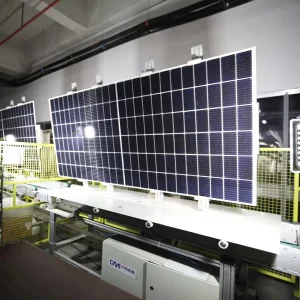
A visual insight into the advanced cell sorting, automated welding, EL testing, and vacuum lamination processes at the Ningbo GAF Solar factories.
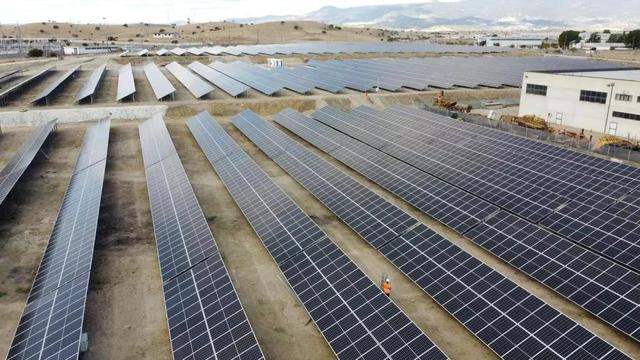
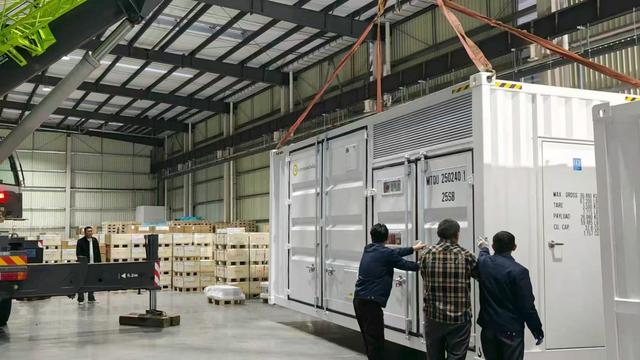
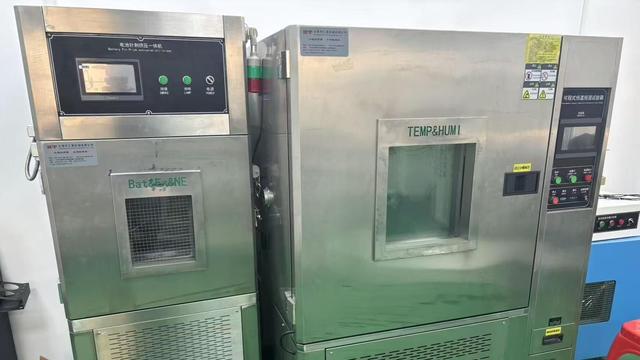
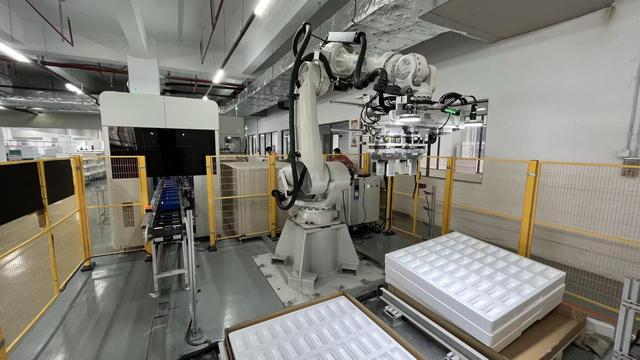
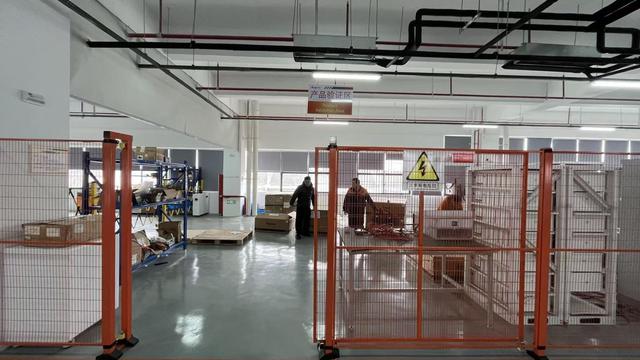
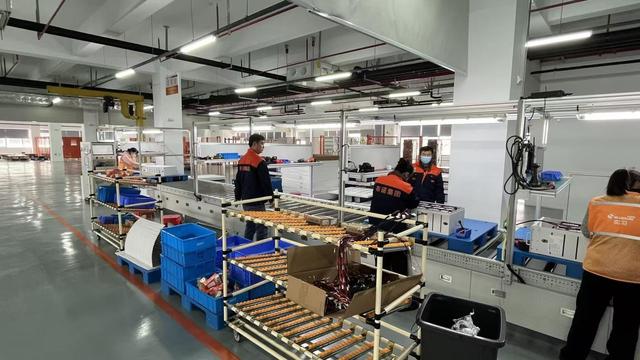
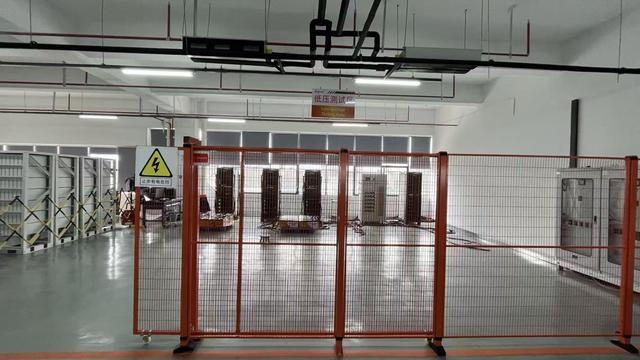
The dominance of Chinese manufacturers in the global PV value chain is not merely a result of labor cost dynamics. Instead, it is built upon deep structural advantages in infrastructure, R&D scaling, and upstream/downstream clustering.
Provinces like Zhejiang and Jiangsu have created highly concentrated PV manufacturing ecosystems. In Ningbo, a solar manufacturer has immediate access to critical components: high-purity polysilicon, multi-busbar (MBB) ribbons, low-iron tempered glass, EVA/POE encapsulant films, junction boxes, and aluminum mounting frames. This proximity reduces overland transport times to hours, eliminates raw-material supply-chain disruptions, and significantly lowers domestic logistical friction.
Ningbo boasts the Port of Ningbo-Zhoushan, one of the busiest cargo ports in the world. For international EPC clients and heavy bulk importers, this means reduced lead times, direct shipping lanes to major markets in Europe, the Americas, and Southeast Asia, and optimized container stuffing processes that protect delicate solar modules from mechanical vibration during transit.
Unlike factories in developing PV regions, Chinese manufacturers rapidly commercialize new cell technologies from lab to gigawatt-scale production. Over the last three years, the transition from P-type PERC cells to N-type TOPCon and HJT cells occurred at unprecedented speeds, making high-efficiency products accessible to mass markets at competitive pricing.
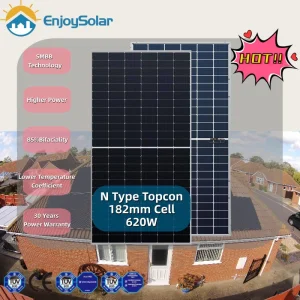
Tunnel Oxide Passivated Contact (TOPCon) technology represents a major upgrade over PERC. Utilizing an ultra-thin tunnel oxide layer and highly doped polycrystalline silicon, TOPCon cells reduce carrier recombination, elevating practical cell efficiencies to over 25.5%. They feature a low temperature coefficient (-0.30%/°C) and negligible Light-Induced Degradation (LID).
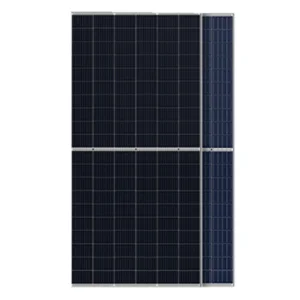
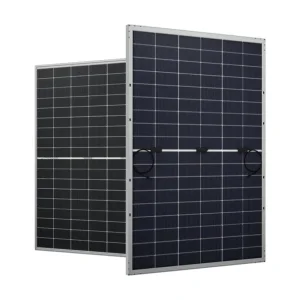
Bifacial modules capture irradiance from both the front and rear faces. When deployed over high-albedo surfaces like snow, concrete, or light-colored sand, bifacial solar panels generate up to 25% additional power. Double-glass construction ensures moisture-barrier protection, reducing the risk of Potential Induced Degradation (PID).
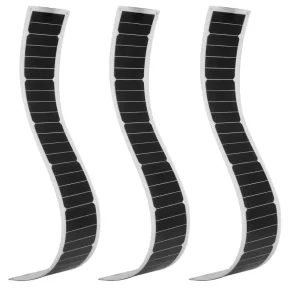
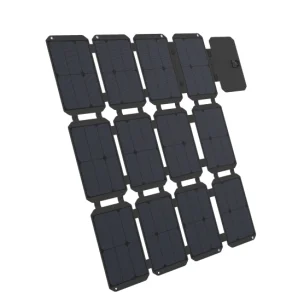
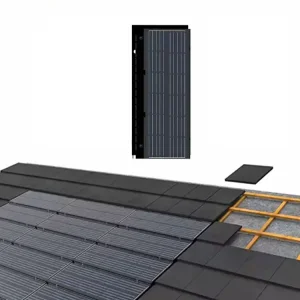
Building Integrated Photovoltaics (BIPV), such as active solar roof tiles, replace traditional building materials to generate electricity directly from building facades and rooftops. Thin-film and flexible rollable monocrystalline strips offer lightweight, adaptable power solutions for curved surfaces and mobile applications.
Modern solar project development requires tailored hardware configurations designed to withstand local climate variables and structural layouts.
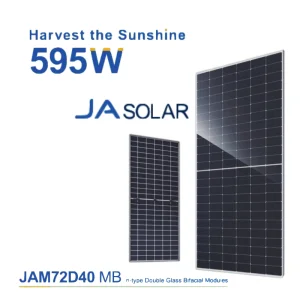
Utility-Scale Ground Mounted Plants: Heavy-duty N-type double glass modules (ranging from 590W to 620W) are standard for utility projects. These modules are compatible with single-axis tracking systems and high-power central or string inverters, reducing Balance of System (BOS) costs by lowering the amount of racking, wiring, and combiner boxes required.
Commercial & Industrial (C&I) Rooftops: C&I installations rely on high-power-density panels (570W to 595W) to maximize power yield within restricted roof boundaries. Excellent low-light performance ensures consistent power generation during early morning and late afternoon hours, optimizing peak-shaving strategies for industrial plants.
Agricultural Irrigation & Floating PV: Agricultural solar irrigation utilizes solar energy to power water pumps in off-grid environments, lowering operational overhead for farming enterprises. Special anti-ammonia and anti-corrosion encapsulations are necessary to withstand the high humidity and chemical exposure in agricultural fields and floating solar reservoirs.
Procuring solar modules internationally involves rigorous quality validation. Standard factory certifications should include:
During the manufacturing run, Tier 1 and quality-focused exporters deploy dual Electroluminescence (EL) testing—once before lamination and once after packaging—to identify micro-cracks, inactive cells, or connection issues that cannot be detected by visual inspection.
TOPCon (Tunnel Oxide Passivated Contact) is an advanced N-type cell technology that achieves higher cell efficiency limits than P-type PERC. It features a lower temperature coefficient (-0.30%/°C vs. -0.35%/°C for PERC), meaning it performs better in hot climates. TOPCon also experiences less first-year and annual degradation, resulting in up to 3% to 5% higher lifetime energy yields.
Bifacial modules capture sunlight from both sides. When paired with high-albedo grounds (like sand, gravel, or white roofs), the back side can increase power generation by 5% to 25%. Double-glass framing replaces the standard plastic backsheet, providing better resistance to moisture, salt mist, sand abrasion, and potential induced degradation (PID).
Yes. Factories customize panels using heavy-duty anodized aluminum frames, specialized POE (Polyolefin Elastomer) encapsulation films instead of standard EVA, and IP68-rated junction boxes. These materials prevent delamination and internal corrosion in seaside, agricultural, or high-humidity floating PV installations.
A reliable factory performs several key tests: Flash testing (to verify power output and current-voltage curves), double EL (Electroluminescence) testing to spot micro-cracks, wet leakage current testing, insulation testing, and physical load testing to verify resistance against wind loads (up to 2400 Pa) and snow loads (up to 5400 Pa).
Building-Integrated Photovoltaics (BIPV) are active solar products, such as photovoltaic roof tiles, that function as both structural roofing materials and energy generators. They are used in modern green buildings where traditional racking-mounted solar panels are restricted by aesthetic, architectural, or structural requirements.
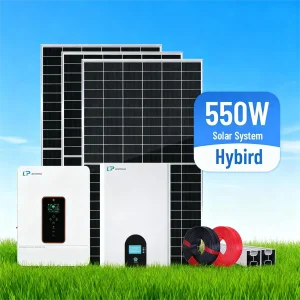
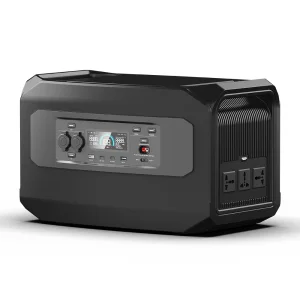
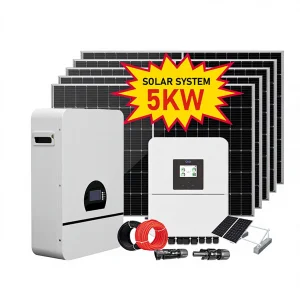
Explore building-integrated solutions, high-durability residential modules, and off-grid solar generators with integrated energy storage.
 GAF Solar